01
Built for the first minutes
The app creates a draft and gives structured prompts before a user has to decide whether to report, refer, map, or escalate.
Our story
Esheria built SafeRide for public transport harassment, private evidence handling, Kenyan legal and support guidance, and route-level accountability that still needs careful field validation.
The work is practical: make it easier to record facts, understand rights, find support, preserve agency, and create prevention signals without turning survivor experiences into marketing material.
SafeRide is strongest when the rider controls the pace: draft first, choose the path, review consent, then decide what leaves the phone.
01
The app creates a draft and gives structured prompts before a user has to decide whether to report, refer, map, or escalate.
02
Stealth trigger setup, calculator decoy mode, quick exit, app masking, and local retention choices reflect real-world safety constraints.
03
Route-level insights, case tracking, public source documentation, and a first-party API keep the product focused on measurable safety improvements.

Supporting detail
Origin
SafeRide focuses on public transport harassment, evidence control, and practical support pathways for Nairobi riders.
Principle
Public claims, visuals, and metrics need to stay traceable to product behaviour or pilot evidence, not dramatic survivor storytelling.
Review
The website, roadmap, content packs, mobile flows, and UNICEF Venture Fund presentation are presented as reviewable artifacts rather than a finished institutional promise.
UNICEF meet
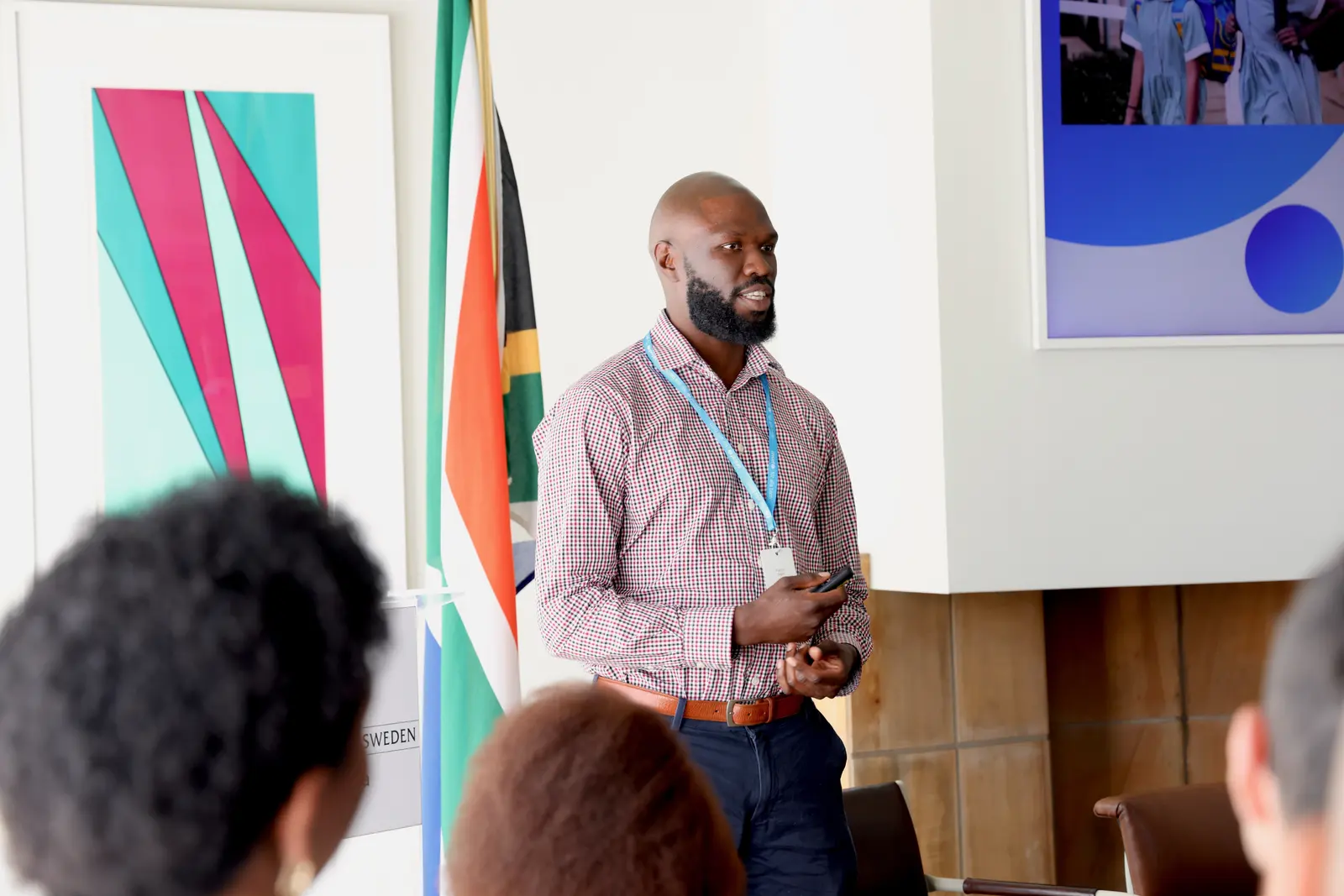
The UNICEF Venture Fund meet is part of the SafeRide story: a review moment where the team explained a privacy-first transport safety workflow to funders and reviewers.
See how Esheria is building SafeRide in the open.
Visit Esheria, the organization behind SafeRide