Partners
An app can’t pick up the phone.
HURIA can.
SafeRide was built and field-tested with them in Mombasa, because a report only matters if someone is there to receive it.
The partner dashboard
Now sit at the other end of the line.
In field testing, HURIA’s caseworkers saw reports on this dashboard. Here it is with a made-up case, and the buttons work.
Sharing with a partner is not switched on in the public testing preview.
Her phone
Waiting for HURIA
SafeRide · Partner dashboard
Made-up case
Case SR-7K3Q-9M2D
- Type
- Escalation
- Status
- New
- In charge
- Unassigned
- Received
- Just now
This escalation needs attention
Nobody has acknowledged it yet. Acknowledge it so your team knows it is being handled.
Acknowledged.
Shared report packet
Redaction level: light
Some names, numbers and places were masked on the survivor’s phone before sending.
- When
- Tuesday 21:47 (approximate)
- Where
- Mfano stage
- Survivor’s statement
- The conductor, Baraka, kept blocking the door at Mfano stage. A passenger, [redacted name], saw it. He gave me his number, [redacted contact], and said he works on KZZ 000Z.The masking missed this name. That’s why it matters who sits here.
- Transport details
- Vehicle plate: KZZ 000Z
Callback number
The survivor agreed to share a callback number with HURIA for this case.
Revealing it is recorded with your name and the time. Reveal it only when you are ready to call.
Evidence
stage-photo.jpg
Evidence files can’t be shared with partners yet. SafeRide keeps them safely.
The audit log
No report content. No IP address.
- You opened this caseJust now
1Press Acknowledge
One button here. One sentence on her phone.
Until someone presses it, she reads “Waiting for HURIA”.
2Reveal her number
Every look at her number is on the record.
Only if she chose to share one, and only when you’re ready to call.
3On her phone, stop sharing
She can stop sharing, and your access ends.
Anything already done, like a call or a referral, can’t be undone.
Everything here happens only in your browser. Nothing is sent.
What isn’t on this desk.
She decides what arrives. These don’t come with it.
Her exact location.
Map coordinates are removed before staff see a report.
Her photos, audio and files.
Staff see the list and her descriptions. Evidence files can’t be shared with partners yet.
Her account.
Not the email address or phone number she signed in with.
Who’s in it with us.
It took more than an app to get this far.
- Human Rights Agenda (HURIA)Rights and legal aid on the Coast, and the desk above. Toll‑free 0769 546 253. (opens in a new tab)
- UNICEF Venture FundBacks SafeRide as one of 11 startups in its first Femtech Ventures cohort, with equity‑free capital and technical support. (opens in a new tab)
- UsikimyeSupport for GBV survivors in Kenya. (opens in a new tab)
- Digital Woman UgandaDigital literacy and gender equality in Uganda. (opens in a new tab)
- MetaWorked with SafeRide through its Llama Impact initiative in 2025. (opens in a new tab)
Working with HURIA
A partner in the room.
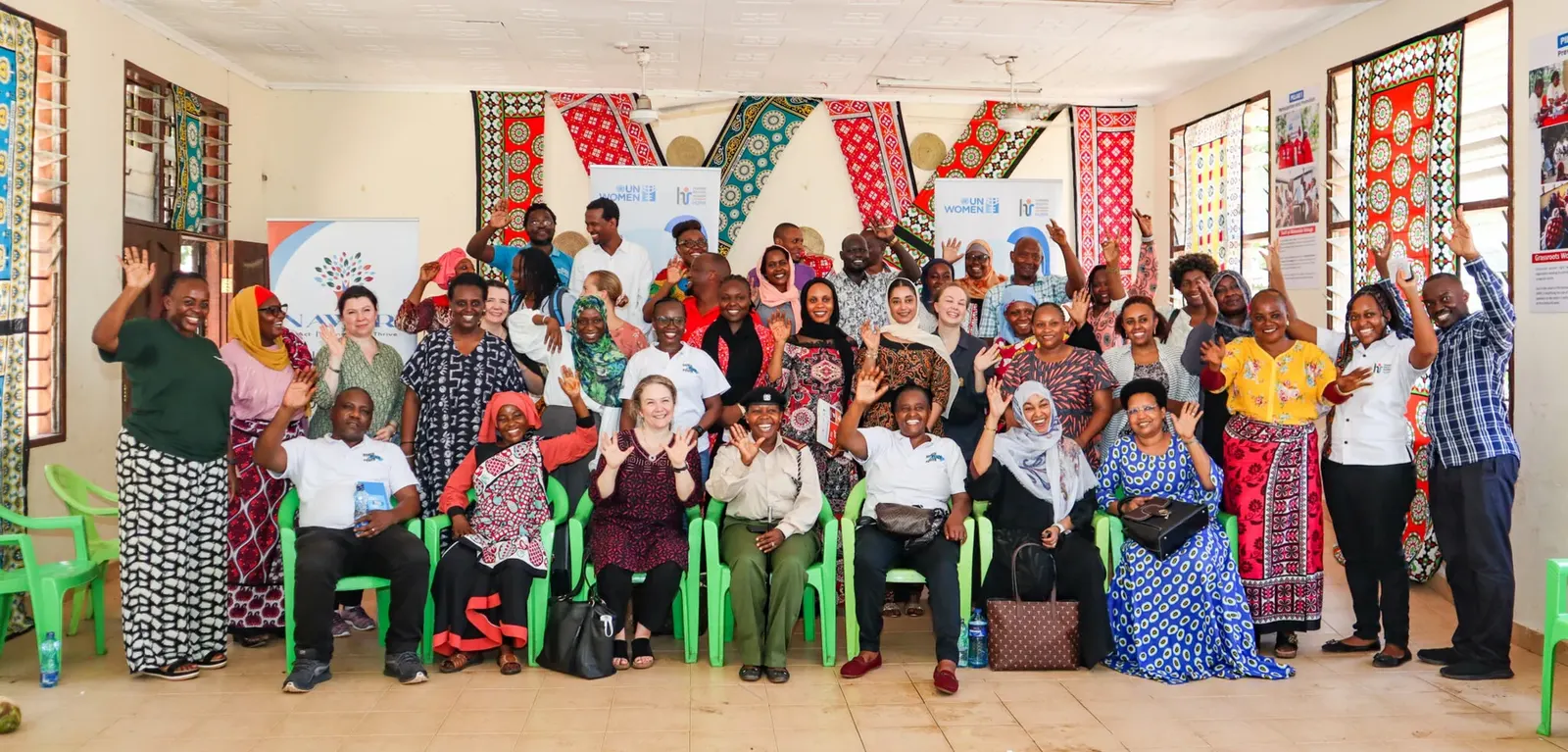
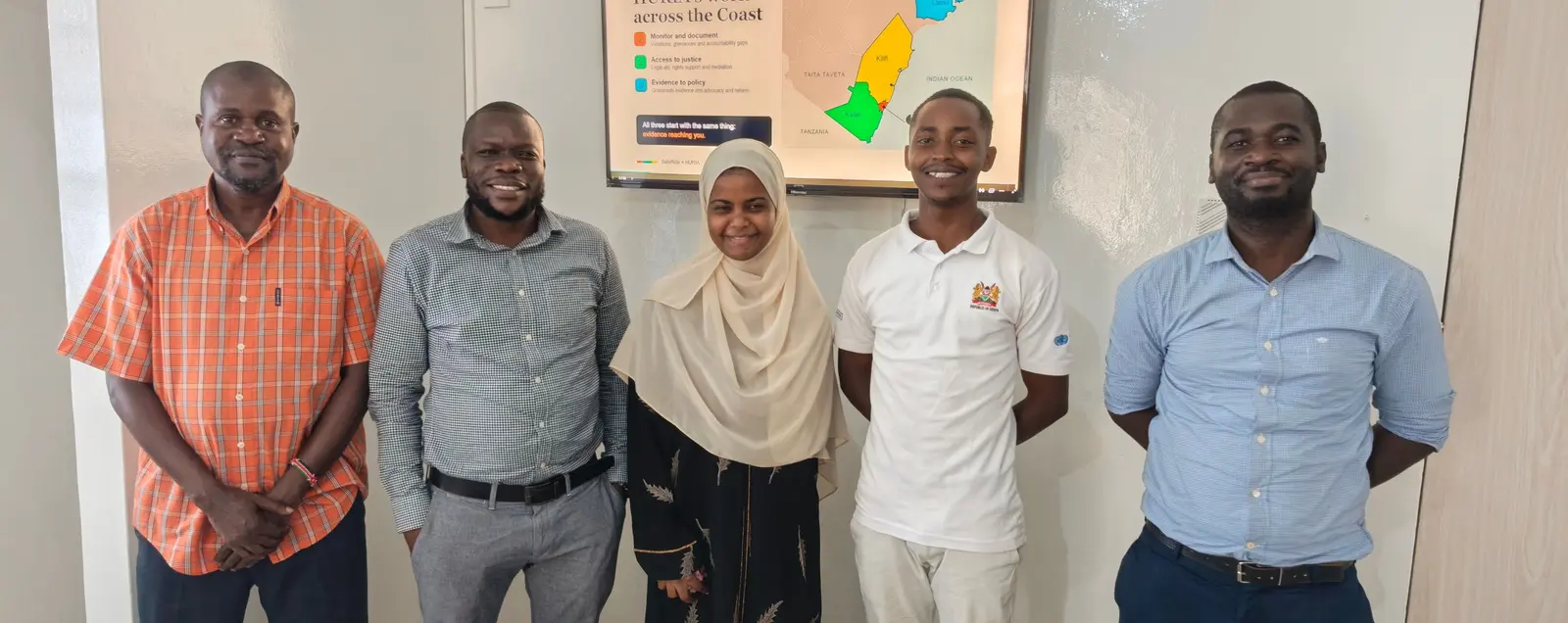
HURIA is SafeRide’s partner on the Coast. This photograph shows the HURIA and SafeRide teams together after the briefing in Mombasa.
This photograph shows a briefing, demonstration or event. Nothing here comes from a survivor’s report.
What it takes to sit here.
Before a single report arrives.
A signed agreement, still in date.
SafeRide routes a report only while the partner’s agreement is current and intake is switched on. When an agreement ends, the reports stop.
Her consent, for that report.
Sharing is off until she turns it on and ticks the consent for that report. She picks how much is masked.
Named staff, with their own accounts.
Individual accounts and passwords, with an authenticator step when the organisation requires it. Access is set up with each partner directly. There is no public link.
Boundaries agreed first.
Every deployment must define its referral boundaries, data retention, deletion and incident response before launch.
HURIA’s desk was the first.
The next one takes an organisation ready to answer, and the time to do it properly.
Ways to work with us
- Answer it.Support and legal-aid organisations: take a desk, and review what the app tells survivors.Talk about a desksaferide.esheria.org/
contact - Act on it.Transport operators: turn what riders report into route changes, training and follow-up.Talk about your routessaferide.esheria.org/
contact - Back it.Funders and engineers: help make the system stronger before it reaches more people.Talk about the worksaferide.esheria.org/
contact
Questions people ask.
Who does SafeRide work with?
HURIA, on the Kenyan Coast. SafeRide was built and field-tested with them in Mombasa. Its wider partners are UNICEF Venture Fund, Meta, Usikimye and Digital Woman Uganda.
Can anyone open the partner dashboard?
No. It is for named staff at a partner organisation. Each person has an individual account, and access is set up with the partner directly rather than published on this site.
What can partner staff see?
Only what she chose to share: her report at the masking level she picked, or a short brief for a referral by phone. They do not see her exact location, her evidence files, or the email address or phone number of her SafeRide account.
Does the dashboard rank routes or operators?
No. It groups shared cases by broad Mombasa subcounty for follow-up. Case counts do not measure route safety, operator performance or individual risk, and no public route score exists.
Can other organisations connect?
Yes, one at a time. HURIA is the partner SafeRide was built and field-tested with. Each partner has its own consent wording in the app and receives reports only while its agreement with SafeRide is in force. A second partner’s wording is still a draft awaiting legal sign-off.