About · Esheria Foundation
There was an easier app to build.
Esheria Foundation builds SafeRide. You can tell a lot about us from the easy choices we didn’t make, and what each one costs.
The edit
7 easier choices
The easier app:
Tracks her on a mapInstead: It never follows her, and the map coordinates in her report are removed before HURIA sees it.
What it costs Caseworkers get less to go on.
See PrivacyThe easier app:
Pushes her to reportInstead: It explains her options in plain language. Keeping the report private is one of them.
What it costs Fewer reports to count.
See How it worksThe easier app:
Runs its AI in the cloudInstead: The assistant answers on her phone, not on a server. In testing
What it costs For now, it needs a phone with 8 GB of memory.
See StatusThe easier app:
Scores her routeInstead: No route gets a safety score until there’s evidence to stand behind it.
What it costs No safety map to show yet.
See StatusThe easier app:
Publishes her storyInstead: We publish what we learn. Her story stays hers.
What it costs No moving stories to show funders.
See In the fieldThe easier app:
Says it’s already liveInstead: We call the public app what it is: a testing preview, for made‑up reports only.
What it costs A slower story to tell.
See DownloadThe easier app:
Hides what doesn’t workInstead: We say what doesn’t work yet, and the code is open so anyone can check.
What it costs Our gaps are public.
See Open source
Every line links to the page where you can check it.
Why it exists
Built for the minutes after.
78% of women surveyed by UN Women in Nairobi never reported the harassment to anyone.
UN Women, Nairobi Report, 2021 (opens in a new tab)
SafeRide is Esheria Foundation’s answer. It keeps a private record on her phone, explains her options in plain language, and lets her decide what, if anything, leaves the phone.
It was built and field-tested with HURIA in Mombasa, because an app can’t pick up the phone. A caseworker can.
Who’s behind it
A foundation, and good company.
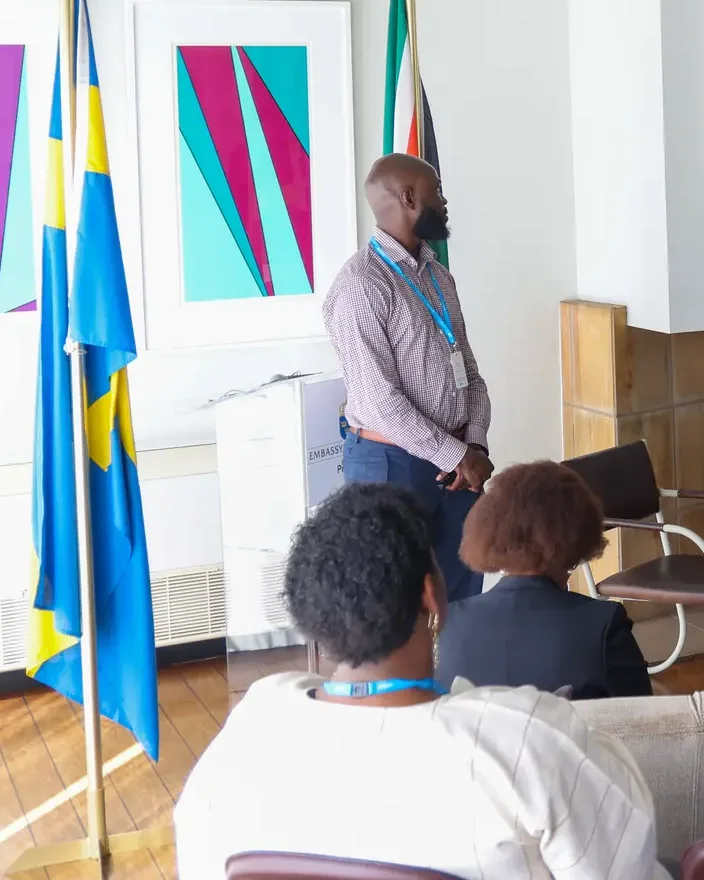
SafeRide is the public-interest work of Esheria Foundation, separate from Esheria’s commercial products. It got this far with help from these organisations.
Human Rights Agenda (HURIA), UNICEF Venture Fund, Usikimye, Digital Woman Uganda and Meta.
Questions people ask.
Who is behind SafeRide?
SafeRide is built by Esheria Foundation, the public-interest and social-impact initiative at esheria.org. It is separate from esheria.ai, Esheria’s commercial product site.
Who backs SafeRide?
SafeRide is one of 11 startups in UNICEF’s first Femtech Ventures cohort, with equity-free capital and a year of technical support. SafeRide also worked with Meta through its Llama Impact initiative in 2025.
Why show what each choice costs?
Because every safety app makes trade-offs, and the people who rely on one should know which ones its makers chose. Each line on the sheet links to the page where you can check it.
Why does SafeRide start on the phone?
So a rider can start a private report before the signal returns, and decide later what, if anything, leaves her phone.
Has SafeRide been tested in the field?
Yes. It was built and field-tested with HURIA in Mombasa. People used it on their own phones, with HURIA there.